May all beings be well, happy and peaceful! • Upcoming: Medin Full Moon Poya Sil Campaign & Guided Bhavana • Dhamma School every Sunday morning 8:00 AM • Daily Evening Bodhi Pooja at 6:30 PM • Contact: 077 799 8530 | May all beings be well, happy and peaceful! • Upcoming: Medin Full Moon Poya Sil Campaign & Guided Bhavana • Dhamma School every Sunday morning 8:00 AM • Daily Evening Bodhi Pooja at 6:30 PM • Contact: 077 799 8530

History & Spiritual Lineage

මඩවිල්ගොඩ ශ්‍රී විශුද්ධාරාම පුරාණ විහාරස්ථානයේ ඉතිහාසය හා ශාසනික උරුමය

An authentic 18th-century sanctuary of the Amarapura Siri Saddhammavansa Maha Nikaya, fostering Dhamma wisdom, Kandyan art heritage, and noble community upliftment in Wadduwa.
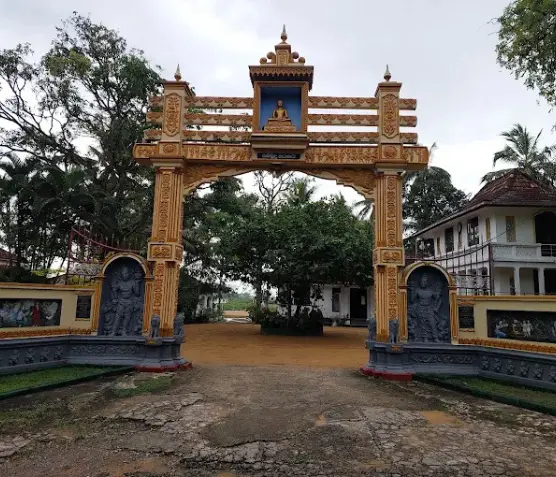
Madavilgoda Sri Vishuddharama Purana Viharaya Historic Shrine Room and Grounds
1780s
Historic Foundation

Founded Amidst the Great Panadura Buddhist Revival

The sacred history of Madavilgoda Sri Vishuddharama Purana Viharaya dates back to the late 18th century (circa 1780s), during the profound revival of Theravada Buddhism across the maritime provinces of Sri Lanka.

Recognizing the need for a dedicated monastery for Buddhist monks to study the Tipitaka, practice meditation, and preserve Buddhist identity under colonial pressures, local landowner and philanthropist Vidanarala Manatunga Gabriel de Silva generously donated the fertile ancestral land in Madavilgoda, Wadduwa to the Maha Sangha.

Under the noble auspices of the Amarapura Siri Saddhammavansa Maha Nikaya, the monastery flourished into a revered center of Pali scholarship, meditation practice, and community spiritual welfare.

Amarapura Nikaya

Siri Saddhammavansa fraternity preserving ancient monastic disciplinary traditions.

Gabriel de Silva Endowment

Historic land grant in Wadduwa sanctified for the perpetuation of the Sasana.

Architectural & Cultural Landmarks

Enduring sacred monuments bearing testimony to centuries of devotion and craftsmanship.

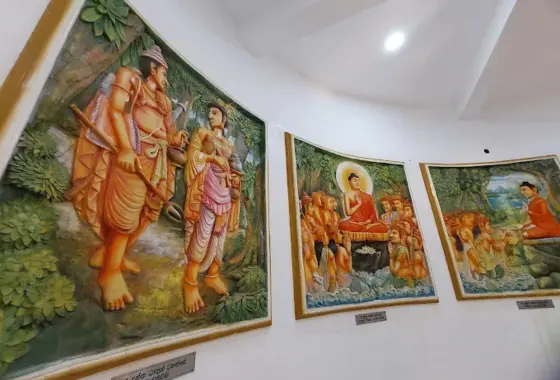
Kandyan Era Frescoes in Shrine Room

Ancient Vihara Mandiraya & Frescoes

The ancient shrine room houses authentic Kandyan-era murals (නුවර යුගයේ බිතුසිතුවම්) with natural earth pigments depicting the Suvisi Vivarana, Jataka allegories, and decorative lotus motifs.

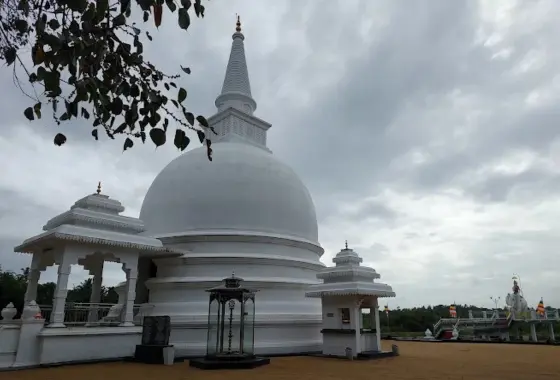
Ran Siripa Seya Stupa at Madavilgoda Viharaya

Ran Siripa Seya (රන්සිරිපා සෑ රජුන්)

A white bubble-shaped stupa enshrining sacred Buddha relics and holy footprint relics, crowned with a gold-plated pinnacle that glistens peacefully over the temple square.

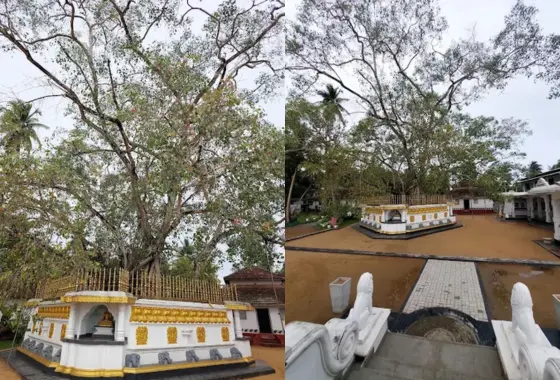
Sacred Bodhi Tree and Golden Maluwa

Sacred Bodhi Tree & Golden Maluwa

Enclosed within a decorative golden Bodhi Prakaraya, the venerable Bo tree offers cool spiritual shade where generations have gathered for daily Gilanpasa Bodhi Poojas.

Venerable Monastic Lineage (නායක මාහිමිවරුන්)

The succession of distinguished Maha Theros who nurtured the temple across centuries.

Late 19th Century Era

Ven. Pinwatte Jayathupala Thero

Pioneered the expansion of the monastery in the 1880s, establishing foundational monastic residences and monastic education in the Wadduwa sector.

20th Century Era

Ven. Pinwatte Saddhananda Thero

Dedicated decades of monastic scholarship and moral instruction, guiding the establishment of the Sunday Dhamma school and community welfare activities.

Present Day (1999 – Present)

Ven. Pinwatte Anuruddha Thero

Chief Incumbent; Adhikarana Sanganayaka of Raigam Korale & Panadura Totamuna; Deputy President of Kalutara District Sasana Arakshaka Balamandalaya; Parivenadhipathi of Walana Vijaya Saukyatha Vidyalaya.

The Three Pillars of Our Monastery

1. Pariyatti (Dhamma Education)

Preserving and passing down the pristine words of the Gautama Buddha through weekly Sunday Sri Saddhatissa Dhamma school, Pali studies, and Pirivena education.

2. Patipatti (Mindful Practice)

Guiding devotees in Samatha and Vipassana meditation techniques to cultivate present-moment awareness, emotional equanimity, and serene inner tranquility.

3. Pativedha (Compassionate Service)

Manifesting Buddha Dhamma through philanthropic healthcare, blood donation campaigns, elderly support, and community welfare throughout Wadduwa.

Temple Etiquette for Pilgrims & Visitors

Modest Attire: Please wear white or respectful modest clothing covering shoulders and knees out of respect for sacred grounds.
Footwear & Headwear: Remove shoes and headwear before entering the shrine rooms, Bodhi compound, and stupa terrace.
Mindful Demeanor: Maintain quiet conversation and silence mobile devices to respect practitioners engaged in prayer and meditation.
Photography: Respectful photography is permitted in courtyard areas; avoid posing with your back directly turned towards Buddha statues.
භාෂාව / Language / மொழி